профессиональный производитель, с тех пор 2009.
распространять аромат любви по всему миру.


русский
Категории
Новый блог
Как создать фирменный аромат для отелей и розничных брендов August 19 , 2026
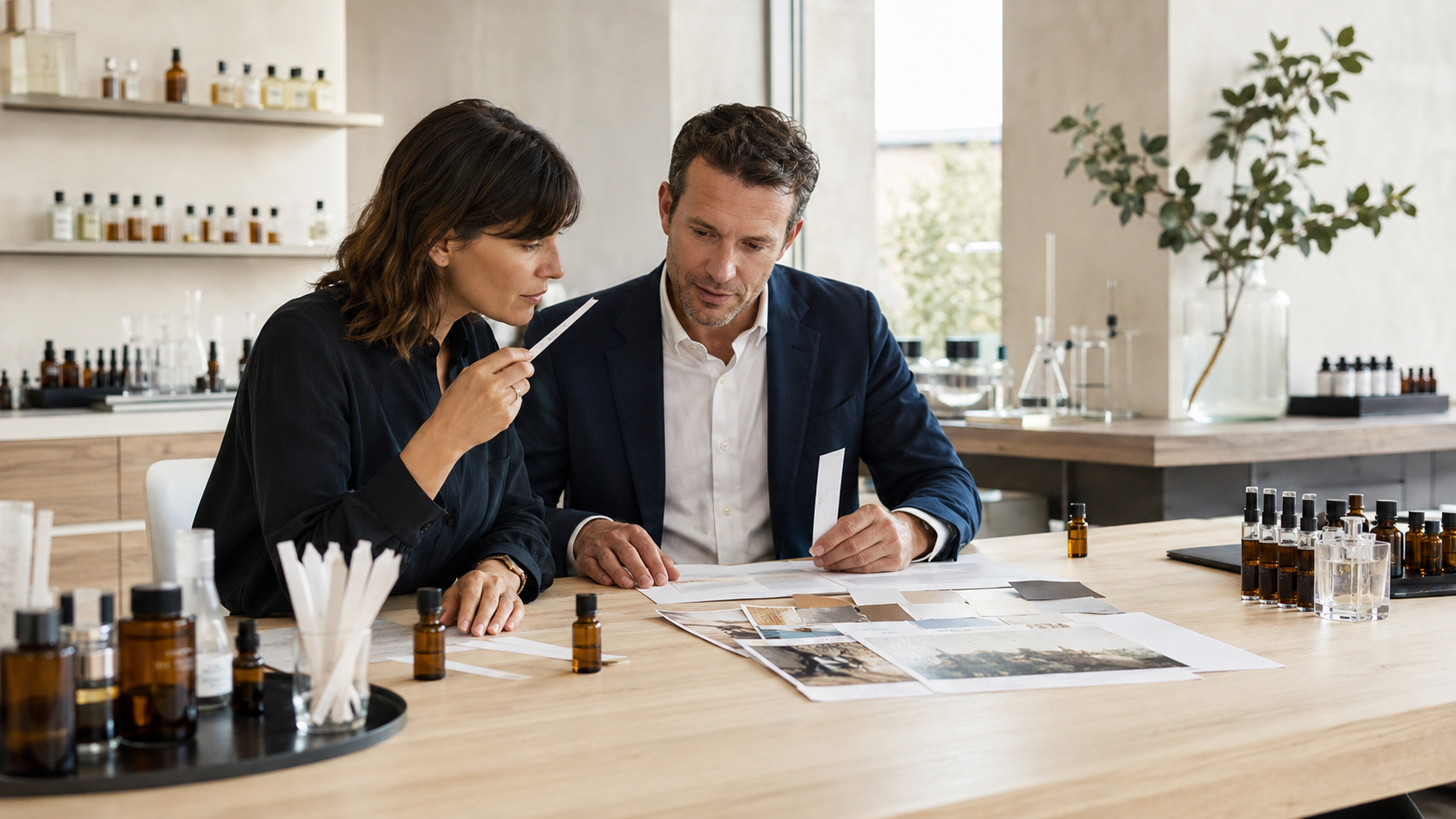
Гость входит в ваш вестибюль после долгого перелёта и замечает тонкий аромат, который ощущается спокойным, изысканным и связанным с объектом.
Месяцы спустя встреча с похожим ароматом может вернуть в память тот момент прибытия. Именно в этом заключается цель фирменного аромата: не просто сделать пространство приятным на запах, а придать бренду узнаваемую сенсорную идентичность.
Его разработка требует большего, чем выбор популярного аромата. Отелям и розничным компаниям необходимы бриф по бренду, структурированное тестирование, техническая совместимость, локальная валидация и производственный контроль.
Это руководство объясняет, как B2B-покупатели могут управлять разработкой фирменного аромата — от первого творческого брифа до масштабируемого коммерческого внедрения.
Фирменный аромат — это ароматическая композиция, выбранная или разработанная для представления конкретного бренда во всех точках взаимодействия с клиентами. Он может распространяться в вестибюле отеля, розничном магазине, центре продаж, спа-салоне, офисе или транспортной среде.
В отличие от обычного освежителя воздуха, фирменный аромат поддерживает определённое значение бренда. Городской бизнес-отель может передавать спокойную уверенность, тогда как курорт может стремиться создать ощущение тепла и расслабления.
Именно постоянство превращает аромат в элемент бренда. Повторное воздействие позволяет клиентам связывать запах с окружающей обстановкой и опытом обслуживания.
четырёхмесячное полевое исследование, проведённое с крупной немецкой железнодорожной компанией показало, что тонкий окружающий аромат имел положительное долгосрочное влияние на воспринимаемый опыт обслуживания и ценность. Исследователи также заметили, что некоторые эффекты сохранялись через две недели после удаления аромата.
Вывод заключается не в том, что любой аромат создаёт лояльность. Контролируемый и многократно воспринимаемый аромат может стать частью того, как клиенты оценивают среду обслуживания.
Самая распространённая ошибка — запросить «роскошный аромат» или «что-нибудь свежее». Эти описания слишком широки, чтобы служить ориентиром для парфюмера или поставщика ароматов.
Полезный бриф должен отвечать на следующие вопросы:
Какое обещание бренд даёт клиентам?
Какие чувства должны испытывать посетители, когда входят в пространство?
Какие три-пять слов описывают желаемую атмосферу?
Каких впечатлений должен избегать аромат?
Кто является целевым клиентом?
В каких странах и культурах будет использоваться аромат?
Какие материалы, цвета, музыка и освещение определяют окружающую среду?
Отель может определить свою идентичность как «спокойную, современную, тёплую и связанную с местной культурой», избегая при этом ароматов, которые кажутся чрезмерно сладкими, медицинскими или тяжёлыми.
Это даёт ароматической команде чёткие границы и снижает количество решений, основанных только на личных предпочтениях.
Язык бренда затем должен быть переведён в обонятельные направления. Цель состоит не в том, чтобы сопоставить каждое прилагательное с одним ингредиентом, а в том, чтобы создать целостное ароматическое впечатление.
Распространённые направления включают:
Чай и цитрусовые: чистые, яркие, спокойные и современные
Лёгкие цветочные ноты: гостеприимные, изысканные, мягкие и элегантные
Зелёные или травяные ноты: естественные, восстанавливающие и свежие
Древесные ноты: основательные, премиальные, тёплые и уверенные
Специи и смолы: насыщенные, характерные и культурно выразительные
Фрукты и гурманские ноты: энергичные, доступные, игривые или создающие ощущение комфорта
Контекст меняет восприятие. Кедр может добавить структуру гостиничному аромату, тогда как тяжелая древесная композиция может ощущаться слишком плотной в небольшом бутик-отеле.
Ароматическое направление также должно гармонировать с материалами объекта. Светлый камень, светлый дуб и лен могут поддерживать иной ароматический профиль по сравнению с темным мрамором, кожей, латунью и драматичным освещением.
Большее количество образцов не гарантирует более удачного решения. Тестирование слишком большого числа вариантов за один сеанс делает сравнение менее надежным.
Начните с трех-шести направлений, которые явно соответствуют брифу. Присвойте каждому образцу код вместо описательного названия, чтобы участники меньше ориентировались на маркетинговые формулировки.
Используйте простую форму оценки, включающую:
Соответствие бренду
Приятность
Отличительность
Пригодность для пространства
Интенсивность при тестируемой концентрации
Эмоциональное впечатление
Попросите оценщиков описать, что передает аромат, прежде чем раскрывать концепцию. Если «спокойный и натуральный» неоднократно описывают как «сладкий и энергичный», скорректируйте его, прежде чем двигаться дальше.
DanQ указывает, что его портфолио содержит более 3 000 ароматических вариантов в чайном, цветочном, фруктовом, древесном и других направлениях. Большая библиотека должна давать полезные отправные точки, а не перегружать покупателей выбором.
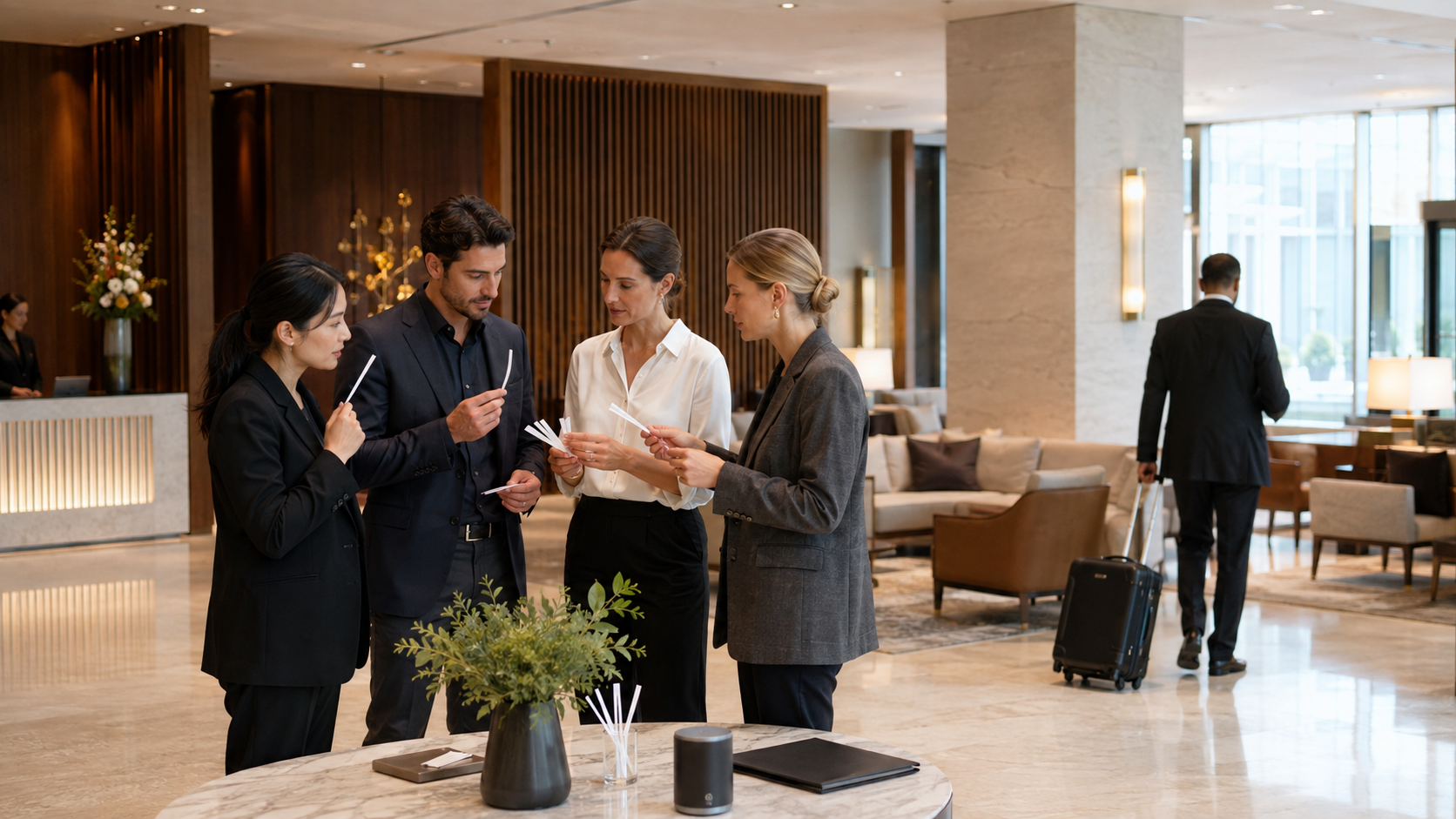
Ароматическая полоска не может воспроизвести коммерческую среду. Воздушный поток, температура, высота потолка, мебель, существующие запахи, количество посетителей и настройки диффузора — все это влияет на восприятие.
Протестируйте отобранные ароматы на объекте. Начните с низкой концентрации и оцените аромат из нескольких точек.
Для отеля проверьте:
Главный вход и стойку регистрации
Зоны отдыха и лаунж-зоны
Подходы к лифтам
Границы с ресторанами, спа-зонами или коридорами для гостей
Для розничного магазина проверьте:
Воздействие при входе
Примерочные и зоны длительного пребывания
Зоны касс и очередей
Взаимодействие с материалами товаров и упаковкой
Желаемый результат — тонкое узнавание, а не максимальная интенсивность. Если сотрудники перестают замечать аромат, прежде чем увеличивать интенсивность подачи, попросите новых посетителей поделиться своим мнением.
Одобрение высшего руководства необходимо, но оно не должно быть единственным источником информации. Целевой клиент может воспринимать аромат иначе, чем внутренняя проектная команда.
Используйте тестовую группу, отражающую соответствующих клиентов и рынки. Попросите респондентов оценить соответствие бренду, комфортность, отличительность и интенсивность, оставив место для неожиданных ассоциаций.
Сотрудники находятся в контакте с ароматом дольше, чем гости. Их отзывы могут выявить проблемы с концентрацией, усталость от аромата или периоды работы, требующие корректировки.
Для международного запуска проверьте более одного рынка. В исследовании межкультурных различий 2022 года были выявлены значительные сходства в приятности запахов, однако индивидуальные и молекулярные факторы по-прежнему влияли на предпочтения.
Разработку аромата и технологию диффузии следует оценивать как единую систему. Разные составы могут различаться по вязкости, летучести, составу растворителя и совместимости с трубками, уплотнителями, пластиковыми деталями и атомайзерами.
Перед массовым производством протестируйте масло с предполагаемым коммерческим ароматическим диффузором. Оцените:
Стабильность распыления
Расход масла при запланированном графике
Остаток вокруг выпускного отверстия
Характер аромата после диффузии
Эффективность после продолжительной работы
Сбалансированный образец на блоттере может измениться при распылении. Летучие ноты могут сначала преобладать, а более тяжелые материалы могут влиять на диффузию или обслуживание.
Не заменяйте непроверенным маслом после ввода оборудования в эксплуатацию. Даже если два масла пахнут похоже, их физические свойства могут отличаться.
Зарубежные покупатели должны рассматривать ароматическое масло как контролируемый коммерческий ресурс, а не просто творческий образец.
Попросите поставщика предоставить документы, необходимые для предполагаемого места назначения и применения, которые могут включать:
Паспорт безопасности (SDS)
Сертификат анализа (COA), если применимо
Информация о партии и производстве
Раскрытие сведений об аллергенах или ингредиентах, требуемое для применения
Транспортная документация
Соответствующие заявления о соответствии требованиям парфюмерной отрасли
Подтверждение совместимости масла и оборудования
Требования различаются в зависимости от страны, состава и канала продаж. Подтвердите их с импортером, консультантом по соответствию требованиям и поставщиком перед заказом.
IFEAT — это международная организация по торговле ароматическими веществами, а не универсальная сертификация для отдельных ароматических масел. Поэтому покупатели должны запрашивать именно тот документ о членстве, отчет об испытаниях, заявление о соответствии или документ на продукт, на который ссылаются.
Уточните коммерческие права собственности до окончательного утверждения.
Уточните:
Является ли формула эксклюзивной или неэксклюзивной
Какие страны, каналы или области применения охватываются
Владеет ли покупатель формулой или получает определенные права использования
Минимальные объемы заказа и условия повторного заказа
Как будут утверждаться изменения формулы
Сделайте утвержденный образец эталоном для производства, указав код, номер редакции, дату утверждения и уполномоченное лицо, принимающее решение.
Если материал необходимо заменить, потребуйте согласованный процесс контроля изменений.
Фирменный аромат теряет ценность, когда в разных местах используется разное масло, интенсивность или график работы. Создайте стандарт внедрения, охватывающий оборудование, настройки, обслуживание и ответственность.
Руководство по внедрению должно указывать:
Утвержденный код аромата
Модель диффузора для каждого типа пространства
Начальные циклы работы и паузы
Допустимый диапазон интенсивности
Процедуру заправки и очистки
Процесс эскалации жалоб
Процесс повторного заказа и отслеживания партий
Для проектов с собственной торговой маркой согласуйте производство ароматов с программой оборудования OEM/ODM. DanQ производит оборудование для ароматизации с 2009 года и поддерживает настройку внешнего вида, логотипа, цвета, упаковки и отдельных функций.
В текущих материалах компании указано, что продукция DanQ экспортируется более чем в 180 стран и регионов. Покупатели должны запрашивать актуальные документы о соответствии для конкретных моделей и подтверждать требования каждого целевого рынка.
Современному отелю необходимо, чтобы его лобби казалось спокойным, эффективным и гостеприимным, но при этом не напоминало спа. Его визуальная среда включает светлый камень, ореховое дерево, чистые линии и теплое непрямое освещение.
Бриф предлагает три направления: чай с легкими цитрусовыми нотами, зеленые цветочные ноты с мягкими древесными оттенками и сухие древесные ноты с легкой пряностью. Тестирование показывает, что чайное направление передает спокойствие и чистоту, но слишком быстро исчезает у входа.
Команда по разработке ароматов повышает стойкость, не делая аромат более тяжелым. После испытания на объекте отель утверждает умеренную интенсивность аромата в лобби и более низкую настройку возле лифтов.
Стандарт внедрения фиксирует код аромата, настройки диффузоров, график обслуживания и утвержденный образец для будущих объектов.
Сроки зависят от доработок, доставки, согласований, тестирования на объекте, документации и эксклюзивности. Следует предусмотреть время как минимум для одной оценки в реальном пространстве.
Не обязательно. Сильный аромат может вызывать жалобы и отвлекать от окружающей среды.
Многие коммерческие программы стремятся создать тонкий, постоянный фоновый аромат, который поддерживает бренд, не доминируя над впечатлением клиента.
Это может быть возможно, но рекомендуется локальная проверка. Климат, архитектура, культурные ассоциации, существующие запахи и ожидания клиентов могут влиять на восприятие одного и того же аромата.
Да, но ароматическое масло для помещений и потребительские продукты могут требовать разных формул, упаковки, маркировки, тестирования и документации.
Обсудите предполагаемые форматы в начале разработки.
Успешный фирменный аромат начинается со стратегии бренда и приобретает ценность благодаря последовательному исполнению при тестировании, технической совместимости, документировании и контроле поставок.
Если вы разрабатываете программу ароматизации для отеля, розничной торговли, недвижимости, транспорта или продукции под собственной торговой маркой, отправьте DanQ информацию о вашем бренде, целевых рынках, пространствах применения, ожидаемом объеме и предпочтительных направлениях ароматов.
Команда может помочь составить краткий список образцов ароматов, оценить совместимость оборудования и подготовить масштабируемое ароматическое решение.
Свяжитесь с DanQ Aroma, чтобы обсудить проект фирменного аромата

профессиональный производитель, с тех пор 2009.
распространять аромат любви по всему миру.


Guangzhou DANQ Environmental Technology Co.,LTD